Russian
 English
More than four thousand people visited the ASU Science Festival sites in Ust-Labinsk
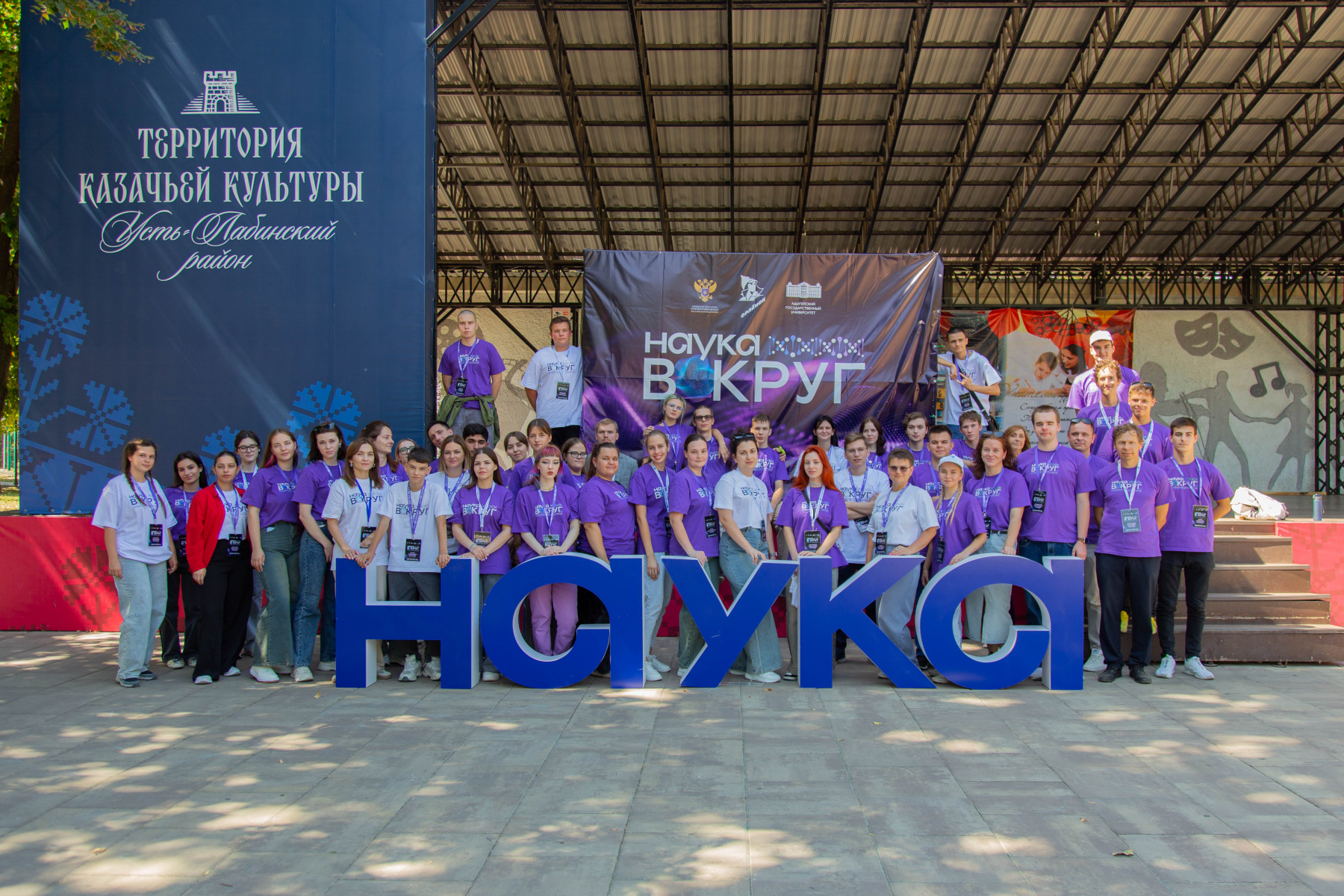
The ASU Science Festival was held on August 29 as part of the August meeting of the pedagogical and parental community of the Ust-Labinsk district, and became the first outdoor Science Festival of the All-Russian scientific and educational project "Science Around. Discoveries Continue", implemented by ASU with the support of a grant from the Ministry of Education and Science of Russia as part of the Decade of Science and Technology.
For the guests of the event, Adyghe State University organized the work of 17 thematic interactive platforms of the "Scientific Workshop" and an open popular science lecture "How the immune system works".
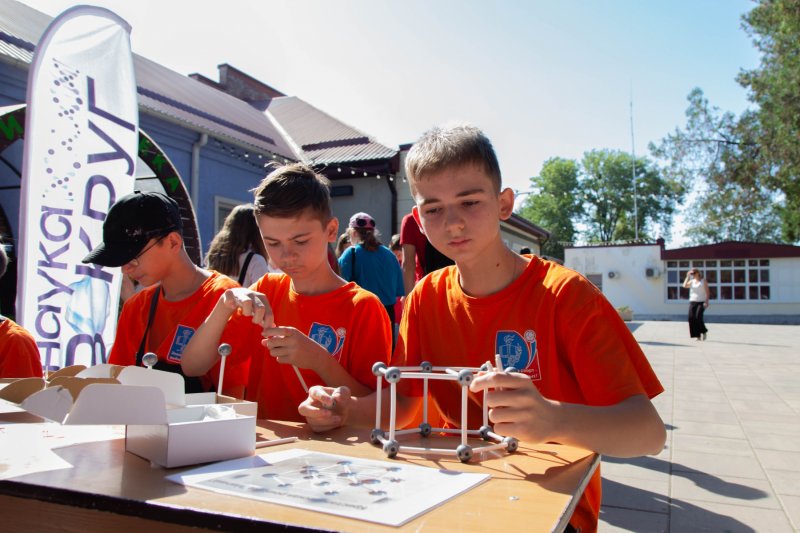
At the Science Workshop stations, visitors were introduced to mathematics and its applications, biology, physics, astrophysics, chemistry and IT in a fascinating and accessible format. Guests solved mathematical puzzles, participated in various experiments and tests, and learned about the structure of the Solar System. Among the highlights were the CRYO Show demonstrating the properties of liquid nitrogen, Bright Chemistry: The Magic of Color in Reactions with colorful transformations of substances, as well as a master class on extracting DNA from a banana, drone flight simulators, constructing crystal lattice models, studying microorganisms in a drop of water, and even searching for "patient zero" in an epidemiological game.
.jpg "IMG_9717 (3).jpg")
Together with Dmitry Shumilov , a candidate of biological sciences, a finalist of the all-Russian competition of scientific "battles" Science Slam, a senior research fellow at ASU , at the open lecture "How does immunity work?", the festival participants looked for answers to questions about how innate immunity works and how acquired immunity works, how immune system cells distinguish "their own" from "others", and how does the immune system change with age?
During the August meeting of the pedagogical and parental community of the Ust-Labinsky district, educational institutions of the district also presented agricultural technology, creativity, culinary art, Cossack traditions, assistance to SVO fighters and much more.