AGU
AGU


 Russian
 English
Navigating Pop Science, Addressing Knowledge Simplification and the Digital Bubble, Insights from Scientists and Communicators
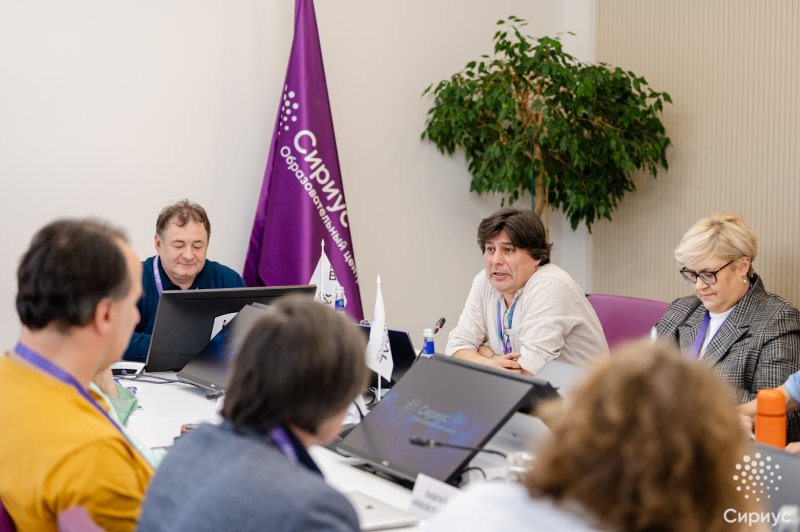
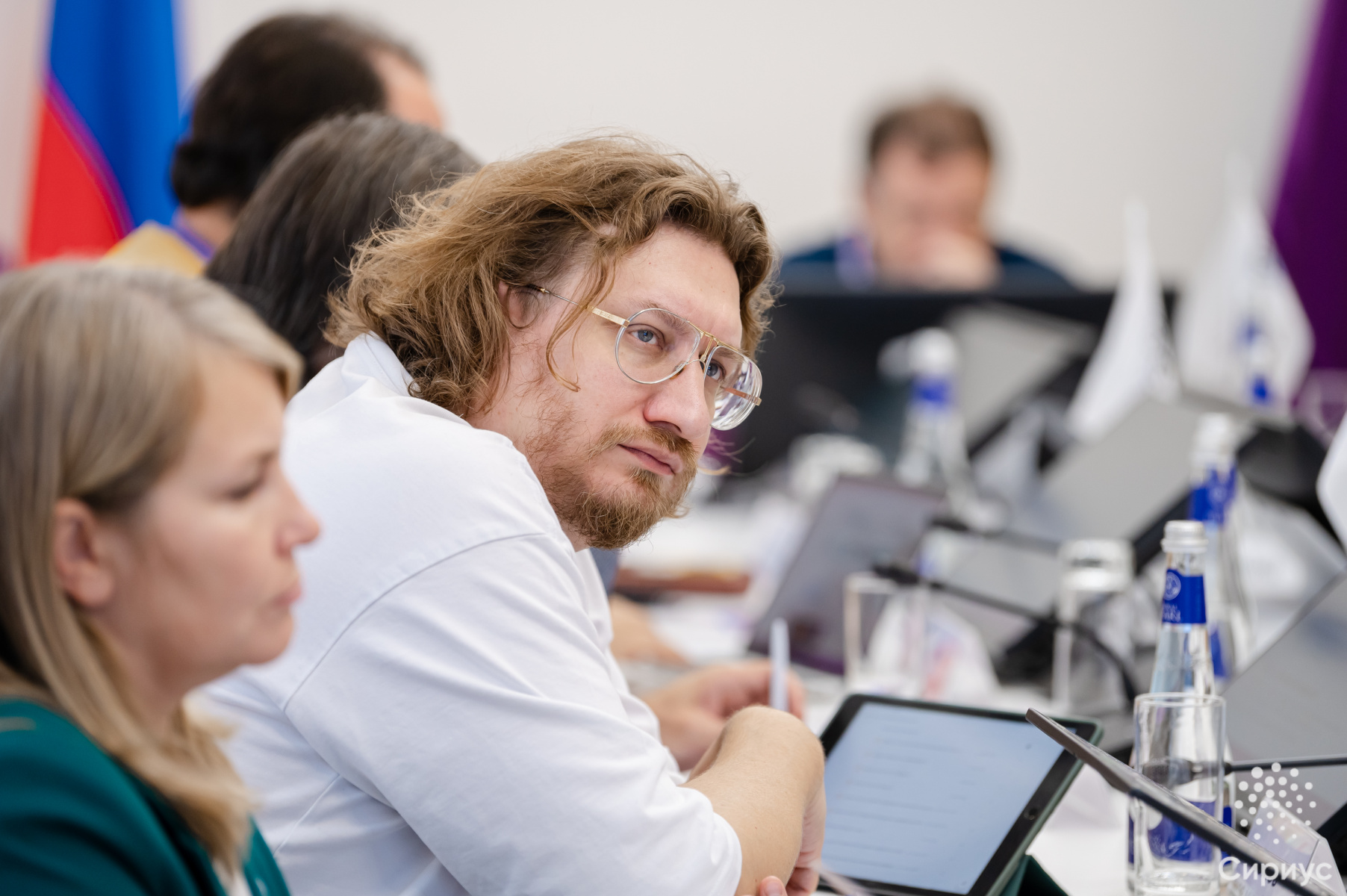
The Sirius Educational Center hosted a Meeting of Popularizers as part of the All-Russian project "Science Around," organized by Adyghe State University with the support of a grant from the Ministry of Education and Science of Russia under the federal project "Popularization of Science and Technology." Renowned scientists and science communicators attended the event, engaging in discussions on successful initiatives to promote science, the growing significance of citizen science, and the evolving communication channels that influence popular science content.
The discussion was attended by prominent figures, including Daud Mamiy, the head of the Science Around project and Rector of Adyghe State University; Alexey Paevsky, a science journalist and popularizer of science who is also a special representative for the Decade of Science and Technology; and Alexey Savvateev, a renowned scientist, popularizer of science, professor at ASU and MIPT, and Corresponding Member of the Russian Academy of Sciences.
Also present were Dmitry Vibe, head of the Department of Physics and Evolution of Stars at the Institute of Astronomy of the Russian Academy of Sciences and a professor of the Russian Academy of Sciences; Andrey Raigorodsky, director of the Phystech School of Applied Mathematics and Computer Science at MIPT and head of the Caucasus Mathematical Center at ASU; Hayk Sargsyan, head of the Laboratory of Physics of Nano and Mesostructures at the Institute of Applied Problems of Physics of the National Academy of Sciences of Armenia; and Nikolay Andreev, head of the Laboratory of Popularization and Advertising of Mathematics at the V.A. Steklov Institute of Mathematics of the Russian Academy of Sciences, who is also a laureate of the international Lilavati Prize.
Additional participants included Elena Bryzgalina, head of the Department of Philosophy of Education at Moscow State University and an expert on bioethics and the challenges of artificial intelligence development; Anna Kartsova, professor in the Department of Organic Chemistry at St. Petersburg State University; Anton Gusev, deputy head of the Educational Foundation "Talent and Success" and director of the Scientific and Technological University "Sirius"; Yakov Somov, director of the educational project "Lectorium" and founder of the "Godenberg League"; and Mikhail Yurik, director of the fund supporting scientific, educational, and cultural initiatives known as "Traektoriya."
Today, universities serve as vital centers not only for the generation of scientific knowledge but also for its dissemination, acting as essential platforms for dialogue between scientists and those outside the scientific community. Their role in organizing and institutionalizing scientific communication is becoming increasingly significant. A notable example of the interaction between science and society is the Science Around project, which aims to promote the achievements of Russian scientists. ASU Rector Daud Mamiy highlighted the project's results during a meeting of science popularizers. The project, taking place from June to November, is structured around three key initiatives: hosting traveling science festivals at the All-Russian Children's Center Orlyonok, creating a media library of video lectures by Russian scientists and science communicators, and conducting a series of online lessons in natural science and mathematics for schoolchildren. More than 200,000 individuals have participated in both the offline and online events associated with the project.
Interest in science is currently on the rise, and society's role as both a "customer" and "sponsor" of research has become increasingly important. This trend creates a demand for clear and accessible explanations of scientific results. In this context, Anna Kartsova, Alexey Paevsky, Nikolay Andreev, Alexey Savvateev, Andrey Raigorodsky, Dmitry Vibe, and Aik Sarkisyan shared their perspectives and experiences in popularizing scientific knowledge for broader audiences.
Elena Bryzgalina, an expert in bioethics and the challenges of artificial intelligence development, addressed the importance of science popularization in the context of 21st-century scientific advancements. She emphasized that the popularization of science is essential for its effective integration into society and highlighted the social responsibility that science carries regarding the implications of its technological advancements.
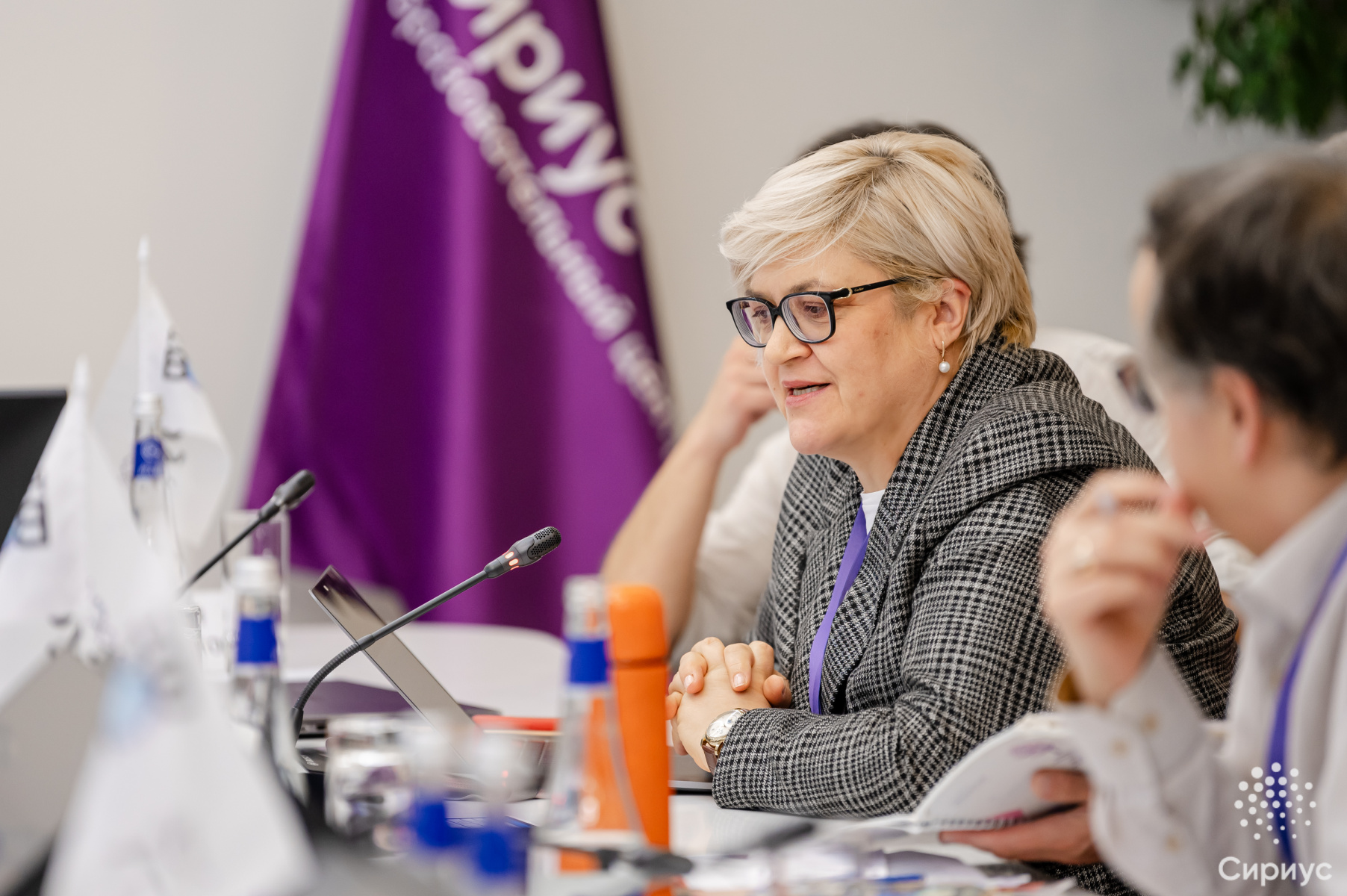
-society's attention encompasses the entire cycle of scientific research, from the formulation of scientific problems and the selection of research methodologies to the implications of applying scientific findings in technology.She noted that the increasing participation of ordinary citizens in the knowledge production process is driven by the ongoing informatization and digitalization of everyday life.- stated Elena Bryzgalina.
Simultaneously, popular science has surged in popularity, fueled by a societal craving for sensationalism and the evolution of mass media. The increasing participation of ordinary individuals—those with “profane knowledge” or a layperson’s understanding—highlights the need to effectively popularize science.
Yakov Somov, the director of the educational project "Lectorium," has emphasized how communication channels influence content. A significant concern is the potential loss of meaning through oversimplification. Furthermore, recommender systems often rely on assumptions that do not promote our intellectual growth.
-Communication platforms often monopolize traffic, dilute content formats, isolate users, and erode context. Neural networks are reshaping the structure and logic of this traffic, necessitating our ongoing efforts to penetrate digital bubbles and preserve complexity. It is essential to consistently analyze communication channels and the flow of traffic to adapt our content, enhance coherence, and fully leverage the potential of each communication channel,- emphasized Yakov Somov.
Mikhail Yurik, the Director of the Foundation for Support of Scientific, Educational, and Cultural Initiatives "Traektoriya," shared insights about the foundation, which was established to inspire and support individuals in their pursuit of lifelong learning about the world through science and culture. It seeks to cultivate a community of knowledgeable and enlightened individuals essential for social progress. Among the foundation's programs and projects dedicated to promoting science are the "Scientific Living Room," which facilitates live interactions with established and emerging scientists; the "Reading Room," a project focused on supporting the publication of exemplary Russian and foreign popular science literature; and the Methodological Seminar for Teachers of Physics and Astronomy, along with the Astrophysical School "Traektoriya," named after O.V. Verkhodanov, both of which are carried out in collaboration with Adyghe State University.
In conclusion, the participants of the meeting emphasized that the educational aspect of scientific endeavors is just as vital as the research component. There is a significant public interest in scientific advancements, and contemporary investments in science necessitate widespread societal endorsement. However, the growing practice of utilizing non-traditional formats and involving amateur science communicators has led to a proliferation of pseudo-scientific content. The popularization of science is increasingly dominated by non-traditional channels—particularly new media, personal blogs, and microblogs—resulting in a decline in the quality of the information being shared. To address this issue, one of the key strategies is to enhance the effectiveness of science communication efforts undertaken by both scientists and science journalists.
About the Project "Science Around"
"Science Around" is a nationwide scientific and educational initiative spearheaded by Adyghe State University. This project is being carried out in collaboration with the All-Russian Children's Center "Orlyonok" and the Moscow Institute of Physics and Technology, with grant support from the Ministry of Science and Higher Education of the Russian Federation. The project's primary objective is to foster an early understanding of the scientific worldview and information culture among schoolchildren, particularly concerning their engagement with science and technology. Additionally, it aims to enhance the perception of scientists and the landscape of Russian science in the eyes of young learners.
The project's objective is to showcase the accomplishments of Russian scientists in the fields of natural sciences, mathematics, and information technology. This initiative aims to highlight the work of domestic researchers and present the outcomes of their investigations. Such efforts are designed to enhance societal appreciation for innovation and science, engage young people in research and development, and ultimately contribute to the overall advancement of society and improvement of living standards.
The project will be executed from June to November and will encompass three main components: organizing traveling science festivals at the All-Russian Children's Center "Orlyonok," creating a media library featuring video lectures by Russian scientists and science communicators, and conducting a series of online lessons in natural science and mathematics for schoolchildren.
The Science Festival at the Orlyonok All-Russian Children's Center took place from June to October as a one-day event. Over 16,000 schoolchildren from various countries, including Russia, Abkhazia, Australia, Armenia, Belarus, Germany, Spain, Kazakhstan, Canada, Kyrgyzstan, Moldova, Tajikistan, Uzbekistan, and Japan, participated in this event.
The festival featured a variety of engaging activities, including unique master classes, experiments, lectures by renowned scientists, and screenings of popular science films. It consisted of 40 thematic areas where students explored subjects such as mathematics, biology, physics, astrophysics, chemistry, and information technology in an interactive and enjoyable manner.
At the Science Workshop stations, children engaged in hands-on experiments in physics and chemistry, used virtual reality technology to learn about the structure of the Solar System, competed in a physical biathlon, created models of human DNA, simulated the role of "patient zero" in a game about epidemic spread, and participated in a scientific photography competition and various intellectual challenges.
The festival also featured lectures from prominent Russian scientists, including mathematicians Alexey Savvateev, Andrey Raigorodsky, and Nikolay Andreev, astrophysicist Dmitry Vibe, chemist Artem Oganov, neurophysiologist Alexander Kaplan, bioethicist Elena Bryzgalina, as well as science journalists Alexey Paevsky and Anna Khoruzhaya. One standout event was Alexey Savvateev's lecture titled "The Mathematics of Chasing on an Electric Scooter," which attracted approximately 1,500 attendees, making it the largest popular science lecture in the history of Orlyonok.
As part of the project, ASU, in collaboration with TASS, has established a media library featuring video lectures by renowned Russian scientists and science communicators. These experts elucidate complex scientific concepts in a simple and accessible manner. The content is tailored to engage both schoolchildren and adults alike.
The online lesson series for the Science Around project covers captivating topics across various fields such as mathematics, astronomy, physics, computer science, biology, and chemistry. Instructors present natural phenomena from the perspective of specific scientific disciplines, aiming to expand and enrich students' understanding of the world around them. They discuss contemporary research on exoplanets and astrobiology, the role of microbes in diverse ecosystems, and the significance of oxidation-reduction reactions in metabolism and energy production. Additionally, they explore advancements in cryptography that are widely applied in our daily lives.
These online lessons are conducted weekly, with the expectation that more than 200,000 schoolchildren from different regions of the country will participate.
The website of the project "Science Around": http://naukavokrug.adygnet.ru/
Media library of popular science lectures of the project "Science Around" https://nauka-vokrug.tass.ru/.