AGU
AGU


 Russian
 English
ASU News
-"This problem is being addressed at the federal level, as it pertains to political, social, and ethnocultural issues. Language is not merely a code; it embodies the essence of a people, their soul, and what makes us who we are. I believe that a solution to this problem can only be achieved through collaborative interaction and collective efforts,"- remarked Susanna Makerova, the head of the Department of English Philology, professor, doctor of philological sciences, and head of the Laboratory of Experimental Linguistics at ASU.
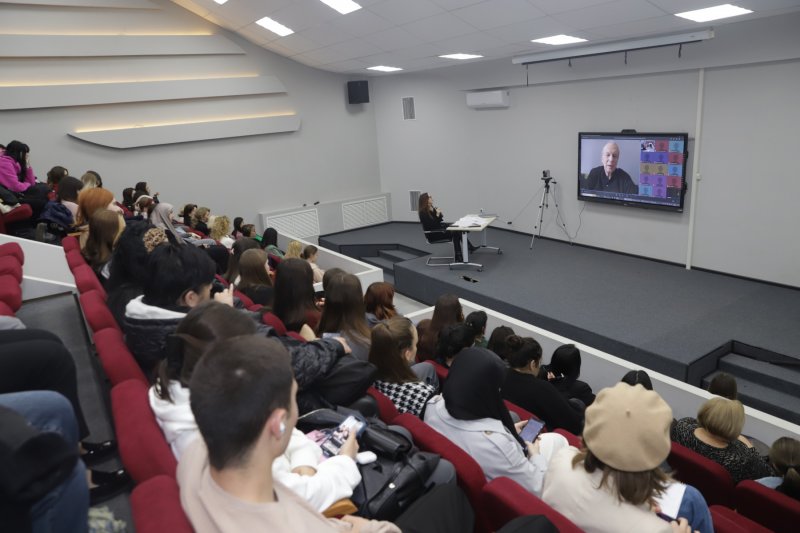
The Chairman of the Russian Committee of the UNESCO Information for All Programme, member of the Commission of the Russian Federation for UNESCO, member of the National Organizing Committee for the preparation and holding of the International Decade of Indigenous Languages in the Russian Federation in 2022-2032 Sergei Bakeikin addressed the conference participants with a welcoming speech . The guests and speakers of the seminar were the head of the department for support and implementation of language projects of the House of Peoples of Russia Feride Aronia, the Chairman of the Council of Rectors of the Southern Federal District, Vice-President of the Russian Union of Rectors Marina Borovskaya and the Russian simultaneous interpreter, professor of the Higher Humanitarian School of KAZGUU, linguist and polyglot, host of the Polyglot TV project Dmitry Petrov .
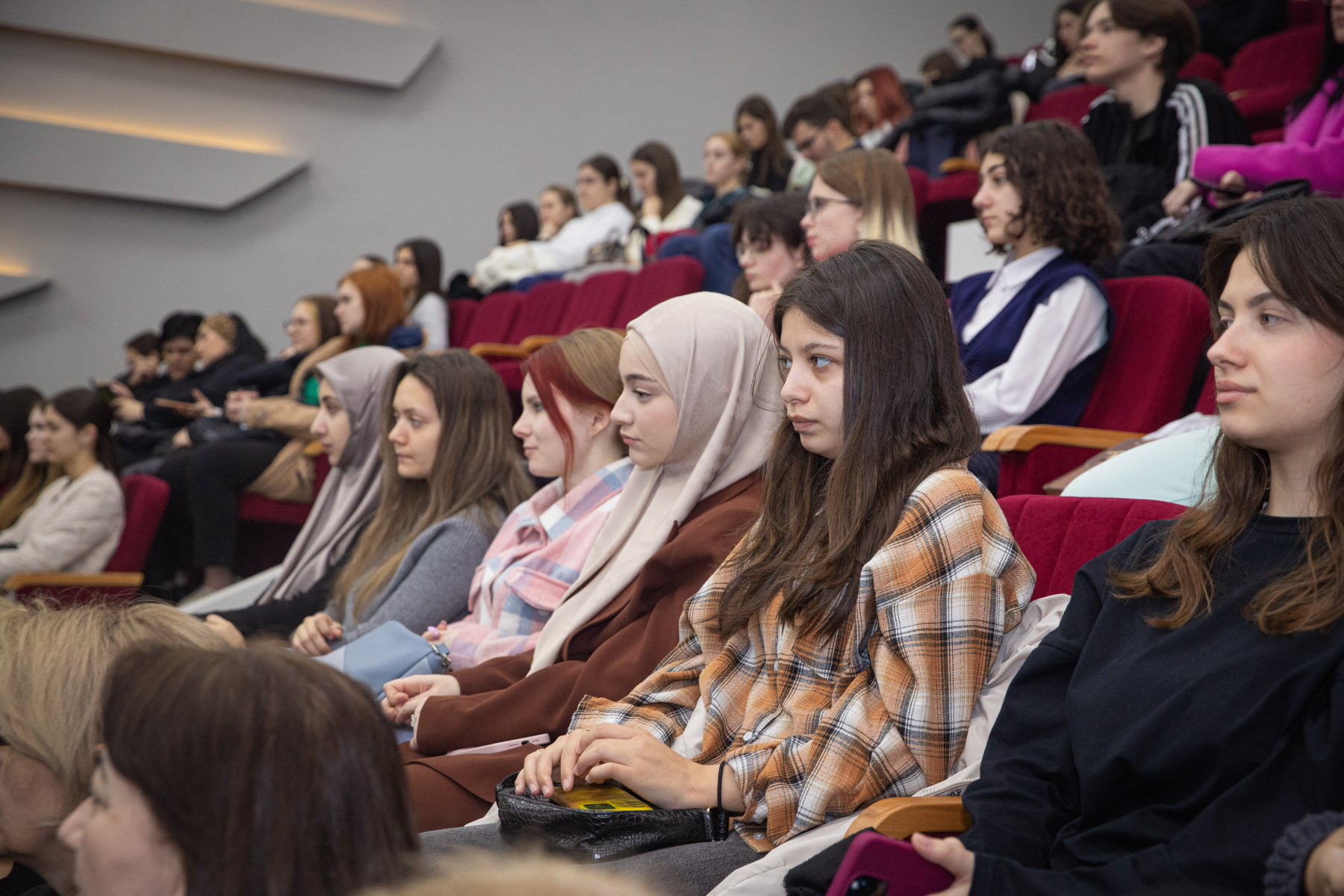
In her welcoming speech, Marina Borovskaya underscored the importance of such seminars and shared plans for further large-scale support of the activities of the Laboratory of Experimental Linguistics on the inter-university platform established by the Council of Rectors of Universities in the South of Russia. Additionally, Feride Aronia discussed collaboration with IT companies to promote indigenous languages.
-We focus on the development and support of the languages of the peoples of Russia in the digital space. As part of this initiative, we are implementing projects aimed at supporting these languages with appropriate keyboard layouts. One of our major projects is our collaboration with Yandex to enrich Yandex Translator with the languages of the indigenous peoples of Russia. In the next stage, we plan to train neural networks in these languages,”- shared Feride Aronia.
Dmitry Petrov spoke about the development of his own language learning method. Its main goal was to attract people who are not professionally involved in linguistics to study languages, so that they would not get confused or disappointed during the training, but would feel comfortable. Thanks to the TV program "Polyglot", broadcast on the TV channel "Culture", Dmitry Yuryevich popularized foreign languages. Now he uses his method of fast and comfortable learning of foreign languages to teach people the languages of the peoples of Russia.
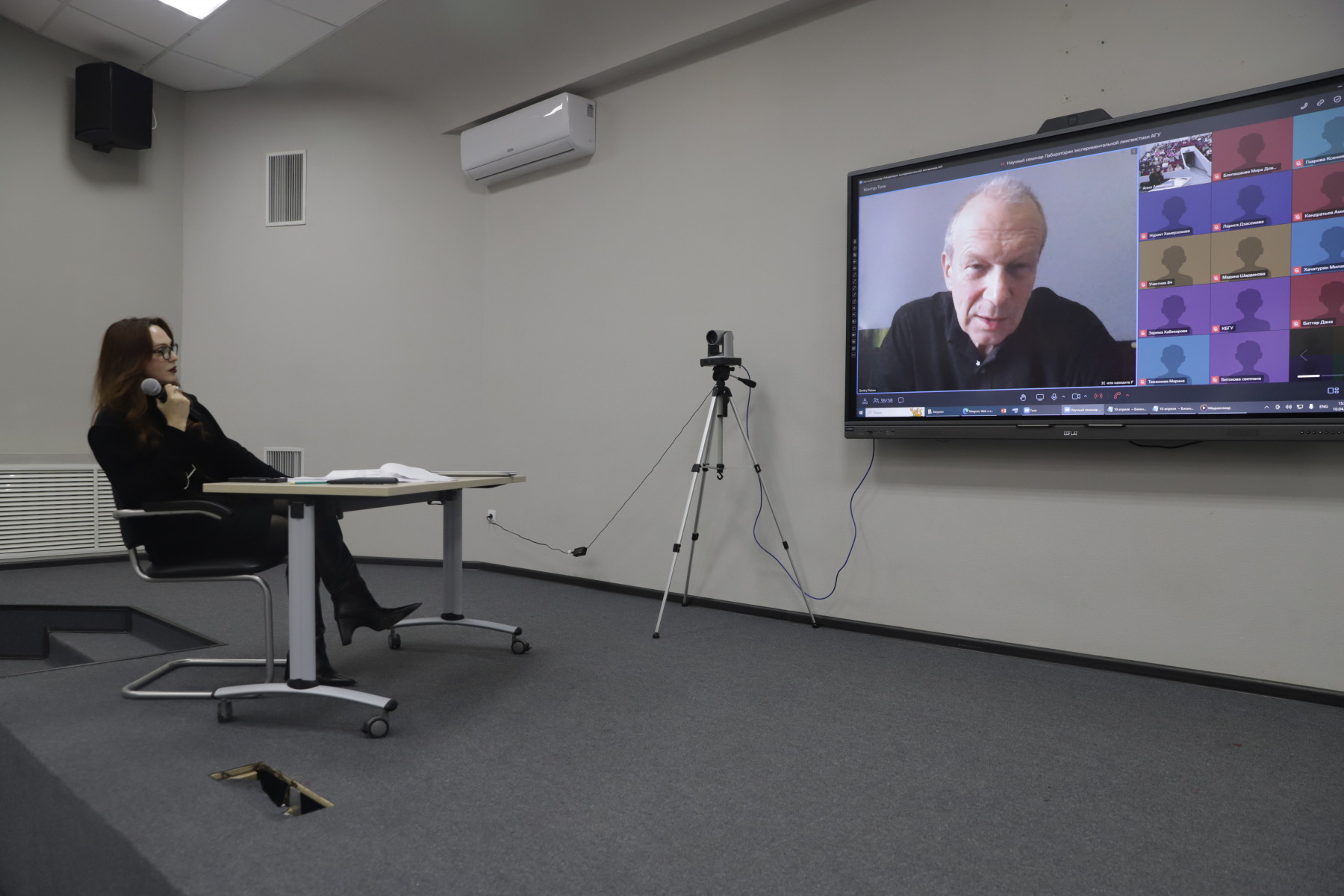
Dmitry believes that his method is suitable for learning any language, including Adyghe. He noted that in order for people to speak their native language, they need to be encouraged and praised for it. The professor also noted that more than half of all people are bilingual and shared his idea for popularizing the languages of the indigenous peoples of Russia. He believes that short courses on learning other languages of the Russian Federation should be held periodically throughout the country, when, for example, a resident of Yakutia studies Adyghe for a week, and a resident of Moscow studies Tatar.
The seminar also raised other issues of bilingualism, taking into account international and regional experiences. Susanna Makerova noted that the topic of the event was a logical continuation of her participation in the international conference at the Russian House of Science and Culture, as well as at the UNESCO headquarters in Paris, where the issues of ethnocultural markers in the language of communication and the popular language of fashion in France were touched upon. The current seminar provided an opportunity to outline options for combining technologies for future research at the Laboratory of Experimental Linguistics of ASU.
– The activities of the Laboratory of Experimental Linguistics of ASU are implemented with partners from the Center for Language and Brain of the National Research University Higher School of Economics using new technologies and tools to solve current linguistic problems in the experimental direction that is relevant today. Such a synthesis of the fundamental and the applied at a new level will certainly bear fruit. And the universal, but at the same time linguistically specific methodology of teaching foreign languages by Dmitry Petrov can be adapted to the Adyghe language, which is significant in methodological and practical terms from the point of view of teaching the language and the effectiveness of its acquisition, – shared Susanna Makerova.
Let us recall that the Laboratory of Experimental Linguistics of ASU was created within the framework of the implementation of the strategic academic leadership program "Priority 2030". The main areas of work of the scientific laboratory are related to the study of the psycho- and neurolinguistic function of the brain of native speakers of the peoples of Russia. Scientists of the laboratory conduct psycholinguistic studies of the Adyghe language and bilingualism (bilingualism), and neurolinguistic clinical studies of speech disorders and cognitive functions in bilinguals using neurovisualization methods.
Video of the seminar: