AGU
AGU


 Russian
 English
ASU Students and Faculty Honored Adygea Liberation from Nazi Invaders with Floral Tribute at Maykop Central Memorial Anniversary
Exactly 83 years ago, after six months of occupation, the Nazi invaders were completely expelled from our republic.
During this brief period, more than 5,000 people in Adygea were shot, tortured, or hanged. The Nazis destroyed industrial enterprises, plundered collective farms, and razed schools and hospitals.
The liberation of Adygea began in January 1943, in the village of Dakhovskaya. Heavy fighting ensued for every village. On January 29, Soviet troops entered Maykop. Fierce battles erupted for the villages of Shendzhiy, Lakshukay, and Tugurgoy, which changed hands several times. Ultimately, on February 18, 1943, the last occupied villages—the villages of Afipsip and Pseituk—were liberated.
The Red Army Shoulder to shoulder with the local partisans actively participated in the liberation. A remarkable chapter in history is the heroic deed of the 23rd NKVD Border Regiment, which held back the enemy onslaught at the passes and was the first to break into the villages.
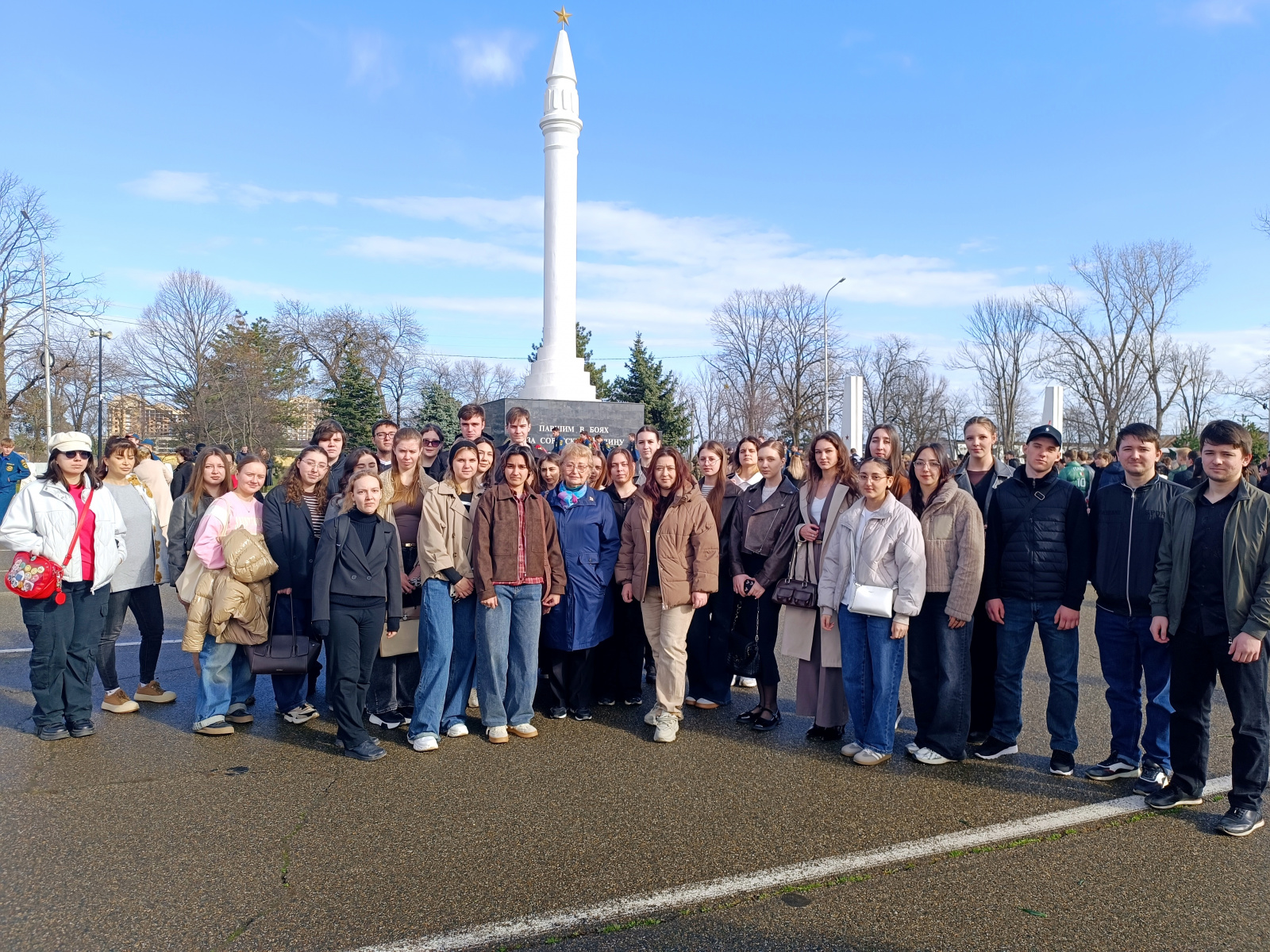
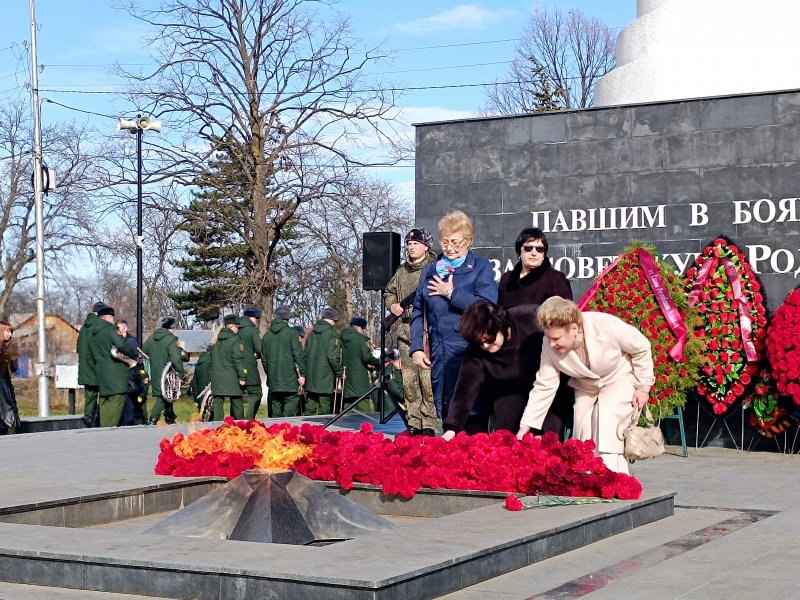
Adyghe State University preserves the memory of these heroic years and honors the deeds of the heroes. Today, students and faculty from the Faculty of Economics and the Faculty of Social Technologies and Tourism laid flowers at the Eternal Flame at the Maikop Central Memorial.
"The history of the Great Patriotic War—heroism, memory, patriotism, and the unity of nations—are at the heart of these students and all my graduate students, including in their project work. Therefore, the act of laying the flowers was not merely a formal gesture; it resonated deeply within their souls and minds. This was evident in their eyes," shared Elena Malysheva, professor of the Department of Russian History, Historiography, Theory, and Methodology of History at Adyghe State University.